Finding a bunk bed that fits adults—or even teens—without feeling cramped is a common headache. Standard twin-over-twin setups leave taller sleepers with sore knees and claustrophobia. And buying two separate beds eats up precious floor space in small bedrooms, guest rooms, or urban apartments. But what if you could stack a full-sized lower bunk with a queen on top—without sacrificing safety, style, or sanity?
Why Most Full and Queen Bunk Bed Setups Fail Miserably
Manufacturers love slapping “bunk bed” on anything with two sleeping surfaces—but structural integrity? Clearance? Real-world usability? Often overlooked. Many so-called full-over-queen models skimp on support beams, use particleboard disguised as solid wood, or leave just 30 inches of headroom on the bottom bunk. That’s not functional—it’s hazardous.
And custom builds? They’re expensive. Contractors charge $3,000+ for something you could engineer smarter—if you knew the right specs.
How to Choose & Install a Full and Queen Bunk Bed That Actually Works
Forget cookie-cutter designs. A successful full and queen bunk bed balances weight distribution, ceiling height, and daily practicality. Here’s how to get it right:
Prioritize Ceiling Clearance—Not Just Bed Size
If your room has 8-foot ceilings, mounting a queen loft above a full bed leaves barely 36 inches of sitting room below. Not ideal. You need at least 42 inches of clearance under the top bunk for comfort. Measure first—buy second.
Material Matters More Than Aesthetics
Solid hardwood (oak, maple, birch) outperforms metal frames for vibration dampening and long-term stability. Metal might look modern, but it amplifies every creak, shift, and midnight snack raid. Wood absorbs noise—and feels warmer.
Reinforce the Frame Like a Structural Engineer
A queen mattress weighs 80–100 lbs. Add a person? Now you’re at 250+ lbs on the upper tier. Your frame needs center support beams, diagonal bracing, and lag bolts—not just screws. Skip this, and you’ll hear groans (from the bed, not the sleeper).
| Build Type | Avg. Cost | Max Weight Capacity (Top/Bottom) | Installation Time | Best For |
|---|---|---|---|---|
| Pre-fab Kit (Metal) | $800–$1,400 | 250 lbs / 300 lbs | 4–6 hours | Renters, temporary use |
| Custom Wood Build | $2,200–$4,000 | 400 lbs / 500 lbs | 2–4 days | Permanent homes, families with teens/adults |
| Hybrid (Wood Frame + Metal Braces) | $1,500–$2,500 | 350 lbs / 450 lbs | 1 day | Balance of cost, durability, and ease |
The Industry Secret: Dual-Purpose Ladders Are a Game-Changer
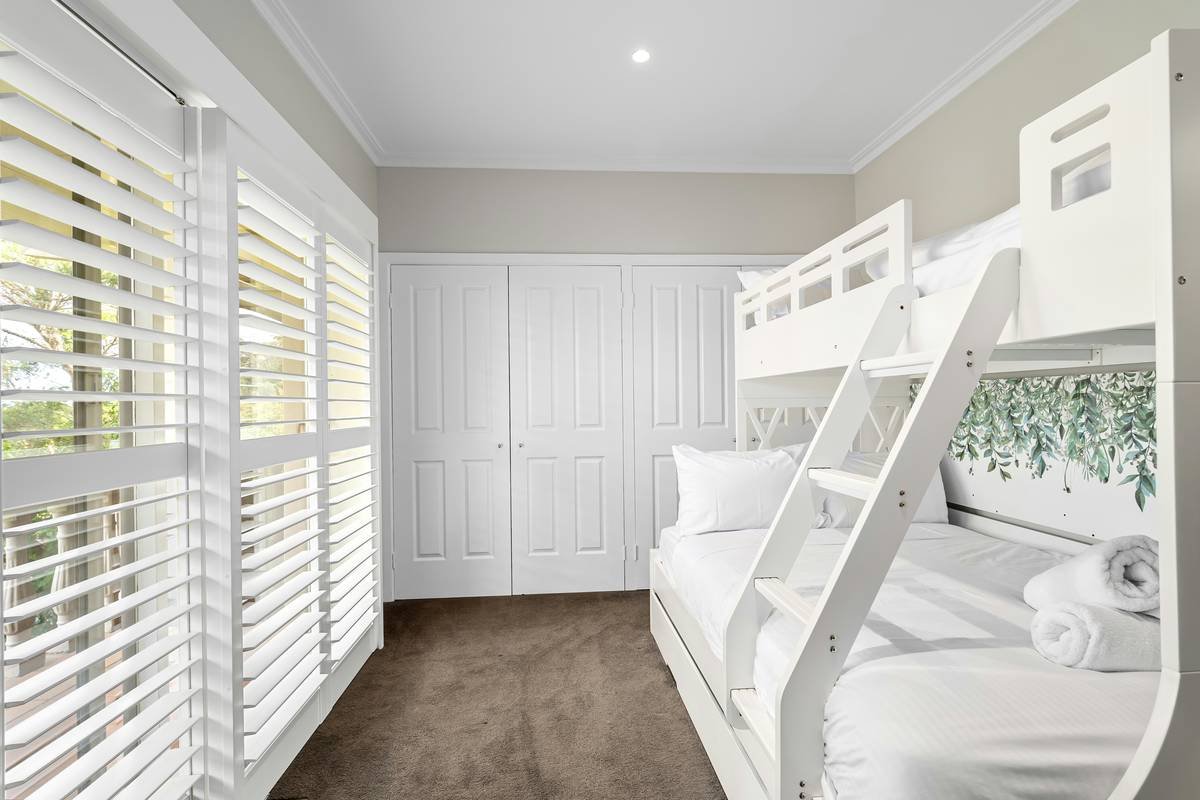
Most buyers obsess over mattress size—but ignore the ladder. Big mistake. The real space-eater isn’t the bed; it’s the wasted footprint of a standalone ladder or staircase. Here’s the insider move: integrate the ladder into functional furniture. Think bookshelf-ladder combos, storage drawers built into each step, or even a mini-desk anchored beneath the climb. One client converted their full and queen bunk bed’s access point into a six-drawer dresser—saving 12 square feet. That’s not clever design. It’s necessity-driven innovation most catalogs won’t show you.
FAQ
Can a full and queen bunk bed fit in an 8-foot ceiling room?
Yes—but only if the bottom bunk sits low (12–14” off ground) and the top bunk uses a slim-profile mattress. Total height should stay under 88 inches.
Are full and queen bunk beds safe for adults?
Absolutely—if built with reinforced joints, center supports, and guardrails rated for 300+ lbs. Avoid flimsy kits sold as “adult bunk beds” without third-party safety certs.
What’s the minimum room size needed?
Ideal: 10’ x 12’. Tight fit: 9’ x 10’, but only if you skip nightstands and use wall-mounted lighting. Measure twice—order once.