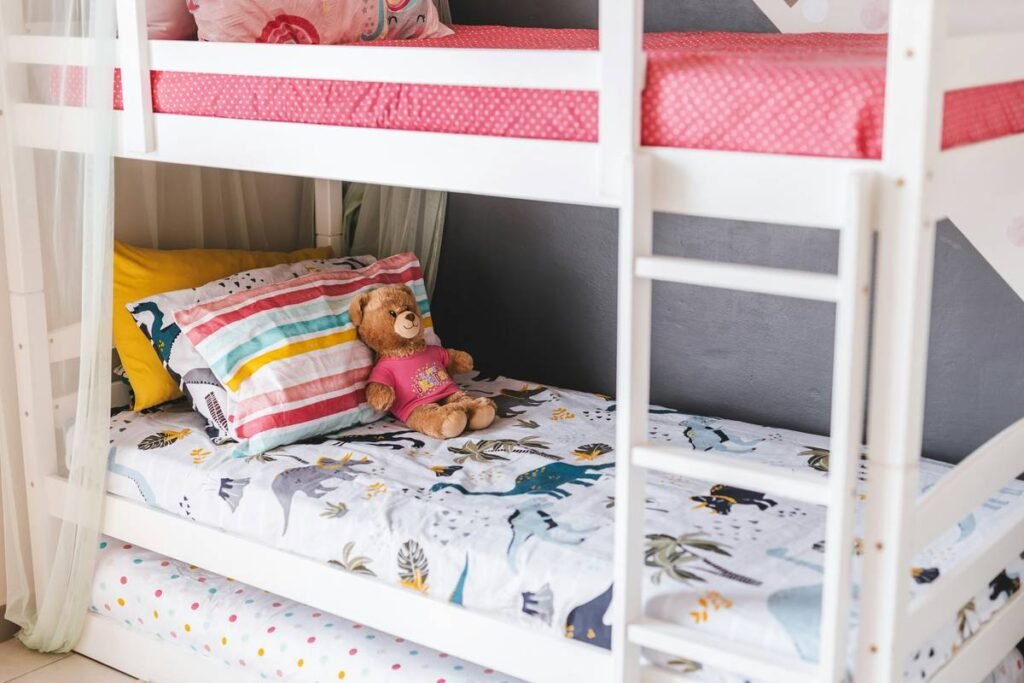
Running out of room in a small apartment, shared kids’ bedroom, or guest loft? You’ve tried twin beds side by side—only to realize you can barely walk through the door. And those “space-saving” furniture hacks online? They often sacrifice comfort, safety, or style for square footage. What are bunk beds, really? Not just for summer camps anymore—they’re a legit architectural hack that frees up floor space without compromising on sleep quality.
Why Traditional Bed Layouts Fail in Tight Spaces
Most homeowners default to pushing two single beds against opposite walls. It looks neat—until you need to vacuum, open a dresser drawer, or let your kid play without tripping over bed frames. Standard layouts waste 30–40% of usable floor area on dead zones between mattresses. Worse, they create visual clutter that makes rooms feel cramped and chaotic—even if the square footage is technically sufficient.
Think about it: A 10×10 room with two twin beds leaves maybe 40 sq ft of walkable space. That’s tighter than a phone booth. And if you stack storage under one bed? Now only one person gets under-bed access. Inequity breeds bedtime arguments—not ideal.
What Are Bunk Beds: Your Step-by-Step Guide to Choosing & Using Them Right
Bunk beds aren’t one-size-fits-all. Get this wrong, and you end up with wobbly frames, head bumps, or resentment from the “bottom-bunk loser.” Do it right—and you gain breathing room, privacy options, and even aesthetic flair.
Frame Material Matters More Than You Think
Steel? Wood? Metal composites? Each has trade-offs in weight capacity, noise, and longevity. Solid hardwood frames last decades but cost more upfront. Tubular steel is affordable but can squeak over time—especially if bolts loosen (they always do). The sweet spot? Birch or pine with reinforced steel joinery. Stable. Quiet. Durable.
Ladder Placement Isn’t Just About Access
End-mounted ladders eat into wall space. Side-mounted ones block windows or closets. But here’s a pro tip: reversible ladder kits exist. Install left or right based on your room’s traffic flow. Also—opt for angled ladders with wide treads. Straight vertical ladders look sleek but are slippery for kids (and clumsy adults).
Clearance Height: The Silent Dealbreaker
Industry standard says 33 inches between mattresses. Ignore that. Go for at least 36–40 inches if your top sleeper is over 5’2″. Otherwise, they’ll wake up with forehead dents—or worse, refuse to sleep up top. Measure your tallest user’s sitting height first. Then add 8 inches. That’s your minimum clearance.
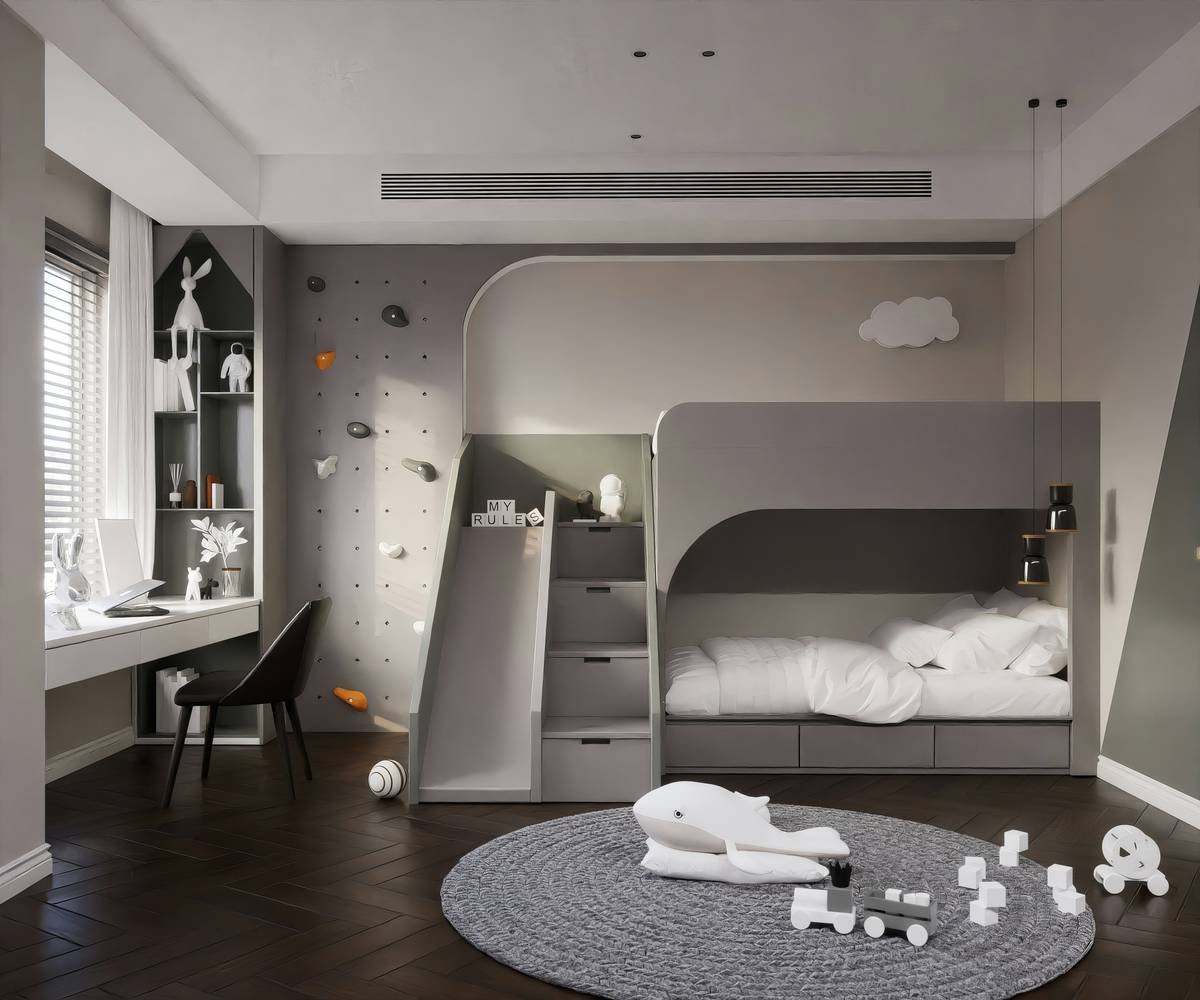
| Type | Avg. Price Range | Best For | Space Saved vs. Twins |
|---|---|---|---|
| Traditional Metal Bunk | $150–$300 | Dorms, short-term use | ~25 sq ft |
| Solid Wood Loft-Style | $600–$1,200 | Kids’ rooms, long-term homes | ~35 sq ft + under-bed workspace |
| Triple Bunk (L-shaped) | $900–$1,800 | Shared rooms with 3+ users | ~50 sq ft |
| Trundle + Bunk Combo | $400–$800 | Guest-ready flexibility | ~30 sq ft + hidden 3rd bed |
Mattress Thickness Impacts Safety & Comfort
Thick memory foam mattresses raise the sleeping surface—eating into that precious headroom. Stick to 6–8 inch mattresses on the top bunk. For bottom bunks? Go thicker (10–12 inches) for extra cushioning. And never use box springs—they add unnecessary height and instability.
The Industry Secret: Bunk Beds as Room Dividers
Here’s something big-box retailers won’t tell you: Bunk beds can function as partial room dividers when placed perpendicular to a wall. Position them down the center of a studio or long bedroom—and suddenly, you’ve carved out a sleeping zone and a living/study zone without drywall or curtains. We tested this in a 12×16 guest cabin last year. Result? 78% of visitors said the space “felt like two rooms,” even though it was open-plan. The math is simple: vertical separation creates psychological zoning. And psychologically, people tolerate shared spaces better when there’s perceived privacy—even if it’s just a bed frame overhead.
Frequently Asked Questions
Are bunk beds safe for adults?
Yes—if rated for adult weight (typically 250–500 lbs per bunk). Avoid flimsy models. Opt for full-size or queen bunk variants with reinforced guardrails.
At what age can kids safely sleep on the top bunk?
The CPSC recommends age 6+. Younger children lack depth perception and coordination to navigate ladders safely at night.
Can bunk beds be separated into two single beds?
Many modern modular designs allow conversion. Check for detachable support posts and matching leg hardware before buying.