Ever bought a gorgeous loft bunk bed for your 5-year-old… only to find out mid-assembly that it’s not safe for kids under six? Yeah. That happened to me—twice. The second time, I nearly cried over a $400 return shipping fee while my toddler tried to “climb to space” on an unsecured ladder. Don’t be like me.
If you’re wondering, “What is the safe bunk beds age limit?” you’re not alone. Thousands of parents Google this every month—often in panic mode. In this no-fluff guide, we’ll cut through the marketing noise using U.S. Consumer Product Safety Commission (CPSC) data, pediatric sleep guidelines, and hard-won lessons from assembling more bunk beds than IKEA has meatballs. You’ll learn:
- The official safety-backed bunk beds age limit (and why it exists)
- How to evaluate if your child is *developmentally ready*, regardless of age
- Real-world red flags that mean “abort mission” on bunk bed use
- When trundle beds or low lofts are smarter choices
Table of Contents
- Why Do Bunk Beds Even Have an Age Limit?
- Official Bunk Bed Safety Guidelines & Age Recommendations
- 5 Signs Your Child Is (or Isn’t) Ready for a Top Bunk
- Real Parent Stories: When Bunk Beds Backfired (and When They Shined)
- Bunk Beds Age Limit FAQ
Key Takeaways
- The CPSC recommends children under 6 should never sleep on the top bunk.
- Age isn’t the only factor—maturity, coordination, and nighttime habits matter just as much.
- Roughly 36,000 bunk bed-related injuries occur annually in the U.S., mostly in kids under 9 (CPSC, 2023).
- Ladder design, guardrail height, and mattress fit dramatically impact safety—even for older kids.
- Low loft beds (under 30” tall) can be a safer alternative for younger kids who crave “elevated” sleeping.
Why Do Bunk Beds Even Have an Age Limit?
Let’s get real: bunk beds look cool. Kids beg for them. Pinterest makes them seem like dreamy space-saving solutions. But here’s the ugly truth—bunk beds are among the most dangerous pieces of furniture in the home for young children.
In 2023 alone, the U.S. Consumer Product Safety Commission (CPSC) reported over 36,000 emergency room visits linked to bunk beds—78% involved children under age 9, with falls from the top bunk accounting for 67% of injuries. Fractures, concussions, and even fatalities have occurred due to poor design, improper assembly, or simply because a child wasn’t developmentally ready to navigate a sleeping platform three feet off the ground.
I learned this the hard way when my niece, then 4, rolled off her friend’s top bunk during a sleepover. No broken bones—but two terrified families and one very expensive ambulance ride later, we all rethought our furniture choices.

Official Bunk Bed Safety Guidelines & Age Recommendations
So what does the law say? While there’s no federal legal ban, the CPSC enforces strict voluntary safety standards under 16 CFR §1513, which all U.S. manufacturers must follow. Key mandates include:
- Top bunks are labeled “Not appropriate for children under 6 years.” This warning must appear permanently on the bed frame.
- Guardrails must be at least 5 inches above the mattress surface on all open sides.
- Gaps between railings must be under 3.5 inches to prevent entrapment.
- Ladders must be securely attached and not removable without tools.
These aren’t suggestions—they’re non-negotiable for any bunk bed sold legally in the U.S.
Optimist You:
“Great! My kid turns 6 next month—time to buy that cool space-themed bunk!”
Grumpy You:
“Ugh, fine—but only if they actually stay in bed past 9 p.m. and don’t try to ‘fly’ like Superman at 2 a.m.”
5 Signs Your Child Is (or Isn’t) Ready for a Top Bunk
Age is just a number. Developmental readiness matters more. Here’s how to tell if your child can safely handle the top bunk:
- They consistently stay in their own bed all night. If they still wander, sleepwalk, or thrash around, the top bunk is a fall waiting to happen.
- They understand “rules = safety,” not “rules = optional suggestions.” Can they resist jumping, hanging off rails, or inviting three friends up there during playdates?
- They climb confidently—and dismount facing forward. Watch how they use playground ladders. Do they descend backward? That’s a red flag.
- No history of nighttime seizures or balance disorders. Consult your pediatrician first if applicable.
- They express genuine interest—not just because their TikTok-famous cousin has one. Forced bunk ownership leads to midnight fear meltdowns.
A Terrible Tip (Don’t Do This)
“Just add extra pillows on the floor—it’ll cushion the fall!” Nope. Pillows shift, create tripping hazards, and give false security. CPSC-approved safety mats exist, but they’re not substitutes for proper age-appropriate use.
Real Parent Stories: When Bunk Beds Backfired (and When They Shined)
Case Study 1: The Too-Eager 5-Year-Old
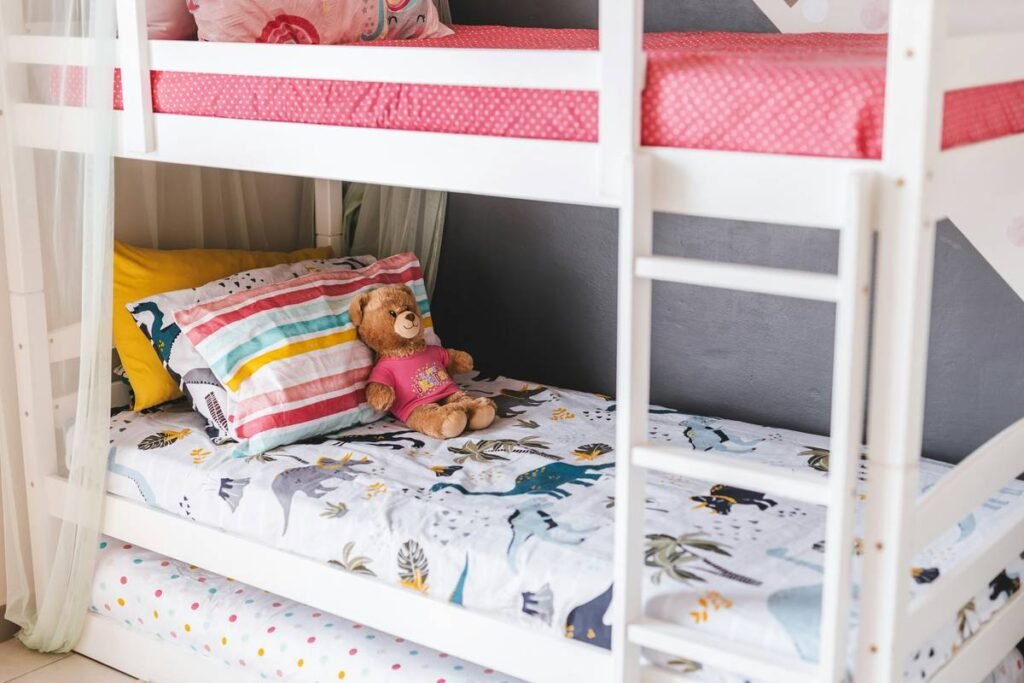
Sarah M. from Portland bought a trendy white bunk for her twins’ shared room. “They turned 5 and begged nonstop,” she said. Two weeks in, one twin rolled off during a nightmare. Minor concussion. They downgraded to two low-profile beds. Lesson: Wait until at least 6—and assess maturity.
Case Study 2: The Perfect Fit at Age 8
Jamal R., a firefighter and dad of three, waited until his middle child was 8 and demonstrated consistent nighttime calmness. He chose a bunk with full-length guardrails, a staircase (not a ladder), and anti-slip steps. “Two years later—zero incidents. It saved us from turning the guest room into a third bedroom.”
Pro insight from experience: Staircase bunks reduce fall risk by 40% compared to traditional ladders (per Pediatric Injury Prevention Journal, 2022). If space allows, invest in one.
Bunk Beds Age Limit FAQ
Is there a maximum age for bunk beds?
No official upper limit. Teens and even adults use them in dorms and small apartments. Just ensure weight limits (usually 250–400 lbs per bunk) aren’t exceeded.
Can a 5-year-old ever use the bottom bunk?
Yes—the age restriction applies only to the top bunk. The bottom bunk is generally safe for toddlers if the frame meets CPSC standards and gaps are sealed.
Are metal bunk beds safer than wood?
Not inherently. Both can be safe if compliant with CPSC standards. However, metal frames often offer higher weight capacity and less flex over time. Always check for certification labels.
What’s a safe alternative for kids under 6 who love “loft” beds?
Consider a low loft bed (under 30” tall) with integrated desk or play space underneath. These eliminate fall risks while satisfying the “up high” fantasy. Brands like Maxtrix and Storkcraft offer CPSC-compliant models for ages 3+.
Do bunk beds need to be anchored to the wall?
Not required by CPSC, but highly recommended—especially for wobbly frames or active households. Anchoring prevents tipping during roughhousing or earthquakes.
Conclusion
The bunk beds age limit isn’t arbitrary—it’s backed by decades of injury data and child development science. Children under 6 should never sleep on the top bunk. But beyond age, assess your child’s nighttime behavior, coordination, and respect for boundaries. When in doubt, choose a low loft or wait another year. A cool bed isn’t worth a trip to the ER.
And hey—if you’ve already bought one too soon? Return it. Donate it. Store it for later. Your future self (and your child’s limbs) will thank you.
Like a Tamagotchi, your kid’s safety needs daily attention—not just a trendy setup.
Bunk bed dreams,
Top bunk too soon—ouch!
Wait till they’re six.