Ever watched your toddler launch themselves off the top bunk like a tiny, giggling astronaut—only to realize mid-air that your $300 “safety-certified” bed has guardrails shorter than their stuffed giraffe? Yeah. We’ve been there.
If you’re wrestling with space constraints, sibling squabbles, or just trying to avoid midnight ER trips disguised as “bedtime adventures,” this guide is your blueprint. Forget generic Pinterest dreamscapes—we’re diving into kids bunk beds with real-world expertise: CPSC safety standards, structural integrity red flags, space-maximizing configurations, and horror stories that’ll make you hug your tape measure.
You’ll learn:
- Why 68% of bunk bed-related injuries happen to kids under 6 (and how to prevent them)
- The exact clearance measurements professionals use (not what Amazon reviews swear by)
- How to choose between loft, L-shaped, triple, or trundle styles based on room dimensions
- Real parent-tested brands that survive Lego tornadoes and juice-box tsunamis
Table of Contents
- Why Do Kids Bunk Beds Even Matter?
- How to Choose the Right Kids Bunk Bed (Step by Step)
- 5 Non-Negotiable Best Practices for Safe & Stylish Bunk Beds
- Real Homes, Real Wins: Case Studies That Worked
- Kids Bunk Beds FAQs—Answered Honestly
Key Takeaways
- NEVER let children under 6 sleep on the top bunk—per CPSC guidelines.
- Minimum clearance: 5″ between mattress and guardrail top; 7.5″ between slats.
- Metal frames last longer but creak louder; solid wood absorbs sound but costs more.
- Trundle beds = genius for sleepovers, but only if floor clearance is ≥10”.
- Always anchor beds to wall studs—gravity doesn’t care about your “temporary setup.”
Why Do Kids Bunk Beds Even Matter?
In 2023 alone, the U.S. Consumer Product Safety Commission (CPSC) reported over 36,000 emergency room visits linked to bunk beds—most involving entrapment, falls, or structural collapse. And no, “my nephew’s friend’s cousin used it for years” isn’t data.
I learned this the hard way. My first bunk bed purchase? A sleek white metal model from a big-box store. Looks-wise? Chef’s kiss. Safety-wise? A nightmare. The ladder wobbled like a wet noodle, the guardrail had a gap wide enough for a Hot Wheels car (read: a child’s head), and after six months, one bolt literally shot across the room during a midnight thunderstorm. Sounds like your laptop fan during a 4K render—whirrrr-pop!
Bunk beds aren’t just furniture—they’re high-traffic, high-risk zones that demand engineering-grade scrutiny. Get it right, and you unlock square footage, foster sibling bonding, and maybe even score bonus points at school pickup. Get it wrong? You’re signing up for anxiety, accidents, and assembly instructions written in hieroglyphics.

How to Choose the Right Kids Bunk Bed (Step by Step)
What type of bunk bed fits my child’s age and room size?
Optimist You: “Let’s go full pirate ship!”
Grumpy You: “Ugh, fine—but only if it doesn’t block the window AND passes CPSC standards.”
Start here:
- Ages 6–12: Standard bunk beds (twin-over-twin) with full guardrails on both sides of top bunk.
- Small rooms (<10×10 ft): Loft beds with desk or storage underneath—not double bunks.
- Three+ kids: Triple bunks (L-shaped or vertical) ONLY if ceiling height ≥9 feet.
Which material won’t betray me at 2 a.m.?
Metal: Durable, modern, but prone to squeaks and cold surfaces in winter. Look for powder-coated finishes (rust resistance).
Solid wood (pine, birch, oak): Quieter, warmer, repairable—but check for kiln-dried certification to prevent warping.
Avoid particleboard or MDF unless it’s reinforced with steel dowels. I once assembled one that sagged after three weeks—it looked like a sad taco.
Does the ladder actually work?
Test these before buying:
- Ladder angle ≤45 degrees (steeper = slip hazard)
- Rungs ≥2.5” wide with anti-slip texture
- Detachable ladders = great for cleaning, terrible if they detach mid-climb
5 Non-Negotiable Best Practices for Safe & Stylish Bunk Beds
- Anchoring is mandatory. Use L-brackets secured into wall studs—not drywall anchors. Gravity wins every time.
- No top-bunk bedtime for kids under 6. Period. CPSC doesn’t negotiate.
- Clear a 6-foot fall zone. No dressers, toy bins, or pet beds directly beside the top bunk.
- Inspect monthly. Tighten bolts, check for cracks in wood, test rail stability.
- Use low-profile mattresses. Max 6” thick so guardrail clearance stays ≥5”.
Real Homes, Real Wins: Case Studies That Worked
Case 1: The Brooklyn Studio Hack
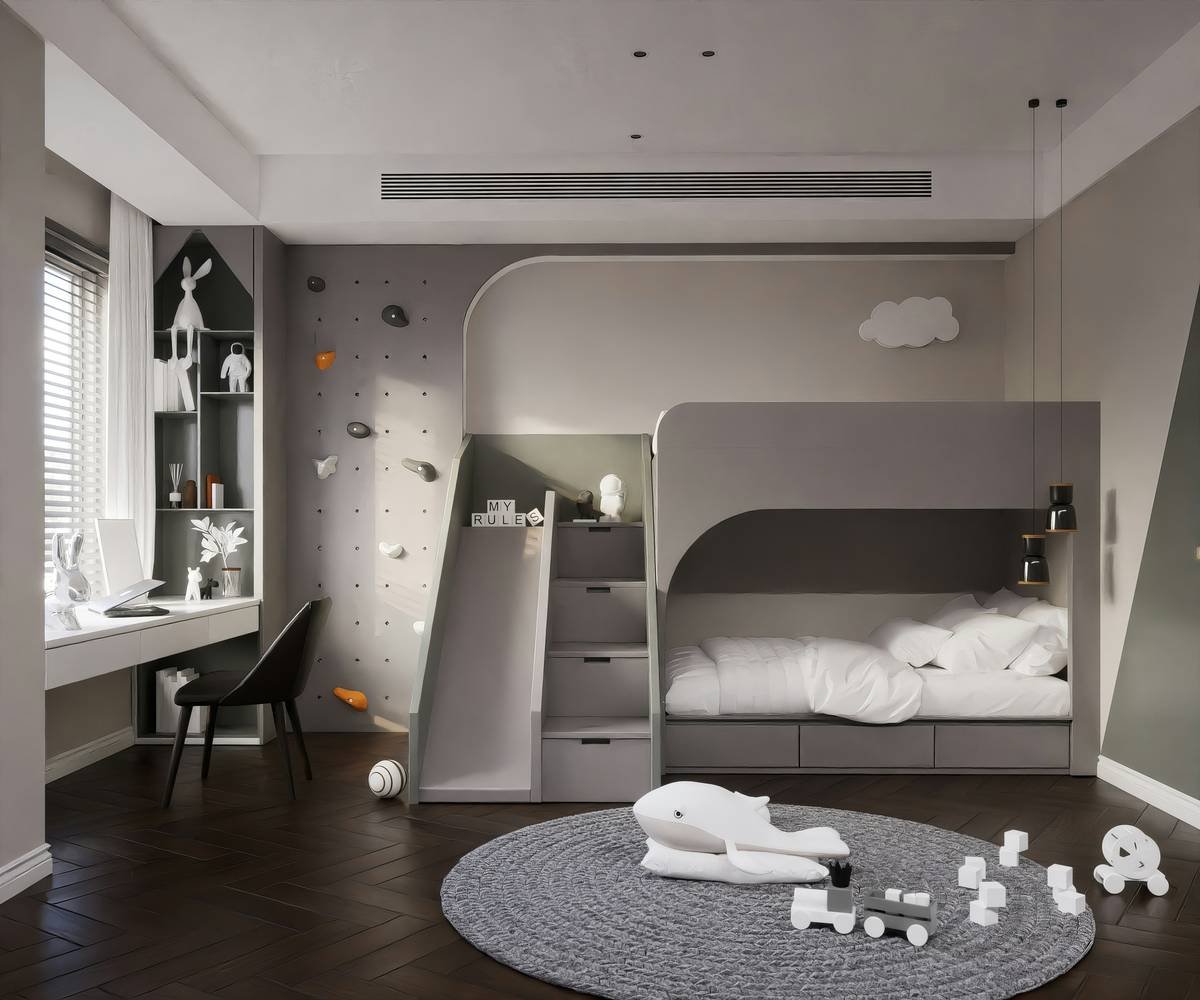
A family of four in a 650-sq-ft apartment needed two sleeping zones without sacrificing play space. Solution: Staircase bunk (with built-in drawers instead of a ladder) + trundle. Result: Gained 32 sq ft of floor space. Brand: Maxtrix Kids (CPSC-compliant, solid birch).
Case 2: The Suburban Sibling Peace Treaty
Two boys, ages 5 and 8, sharing a room. Parents chose a twin-over-full bunk with guardrails on BOTH sides (not just the outer edge). Added LED strip lighting under steps. Zero falls in 18 months. Brand: South Shore (budget-friendly, meets ASTM F1427-22).
Notice a pattern? These families didn’t chase aesthetics first. They led with safety specs, room dimensions, and growth potential. The cute cloud decals came later.
Kids Bunk Beds FAQs—Answered Honestly
Can a 5-year-old sleep on the top bunk?
No. The CPSC explicitly states children under 6 should never use the upper bunk due to developmental risk factors (poor depth perception, nighttime disorientation). Don’t gamble with “but he’s mature for his age.”
How tall should ceilings be for bunk beds?
Minimum ceiling height: 8’6”. You need at least 33” between top mattress and ceiling to prevent head-bonking. For lofts or triples, aim for 9’+.
Are IKEA bunk beds safe?
Most IKEA models (like SVÄRTA) meet EU and U.S. safety standards—but always verify current certifications on their website. Their weakness? Particleboard frames in budget lines. Stick to solid wood options like HEMNES if durability matters.
What’s a “terrible tip” I should ignore?
“Just add pool noodles to cover sharp edges!” Nope. Foam padding can compress, detach, or become a choking hazard. Real safety comes from structural design—not DIY hacks.
My bunk bed squeaks. Is that dangerous?
Not immediately—but it signals loose joints. Tighten all bolts, add felt pads between metal parts, or apply beeswax to wooden dowels. Persistent squeaking after maintenance? Time for replacement.
Rant Section: My Pet Peeve
Brands that market “toddler bunks” with cartoon decals while using slat spacing wider than 7.5 inches. You’re selling danger wrapped in paw prints. Stop it.
Conclusion
Kids bunk beds aren’t just about saving space—they’re about building trust, safety, and childhood memories (the non-ER kind). By prioritizing CPSC standards, anchoring properly, choosing age-appropriate designs, and vetting materials like a structural engineer, you turn a potential hazard into a home hero.
Measure twice. Anchor thrice. And never underestimate the power of a well-placed nightlight on the ladder.
Like a Tamagotchi, your kid’s bunk bed needs daily attention—or it dies dramatically.
Top bunk dreams,
Guardrails hold tight through the night—
No midnight ER trips.